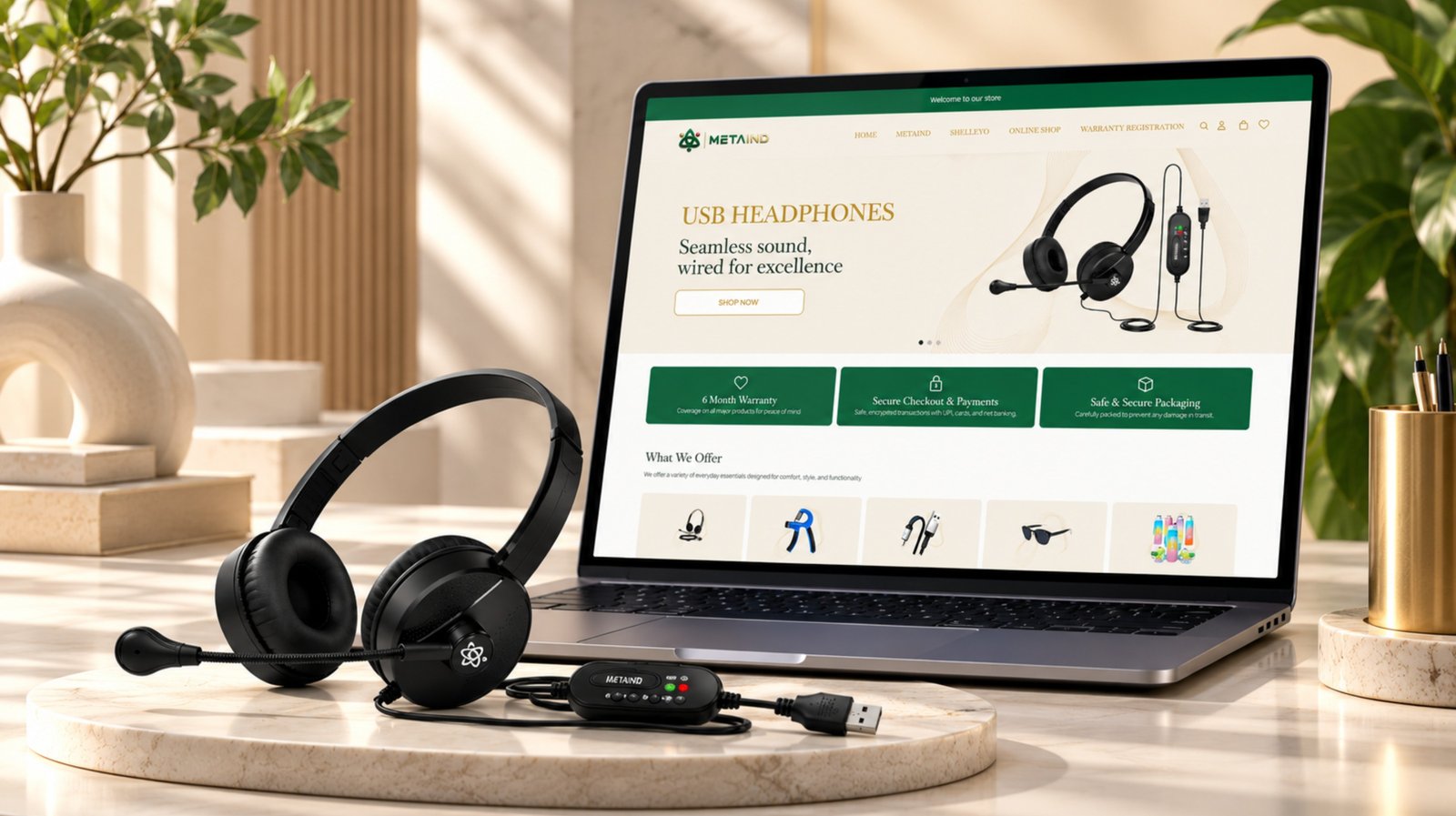
We built Metaind’s Shopify store to sell USB headsets and everyday accessories to home users, offices and resellers, with a second brand, Shelleyo sunglasses, running under the same roof.
Metaind sells USB headsets for calls, classes and office work, plus everyday accessories. It needed one store that could serve a single buyer, a 20-seat office and a reseller, and give people a reason to buy from the brand directly.
Client : Metaind
Market : India, nationwide shipping
Category : Headsets, audio and accessories; Shelleyo sunglasses
In a category where most buyers default to big marketplaces, a brand’s own store has to earn the order.
That means reasons a marketplace listing can’t give: a direct warranty, better pricing for volume, real support, and a path for shops that want to stock the brand. The store also had to keep two very different product lines from feeling like one cluttered catalogue.
/ The problem
Three kinds of buyer arrive at the same store, each with a different question. A standard storefront answers only the first, and sends the other two away.
Home or office user
“Will this work with my laptop and my Zoom calls?”
Home or office user
“Will this work with my laptop and my Zoom calls?”
Shop or reseller
“Can I stock this brand?”
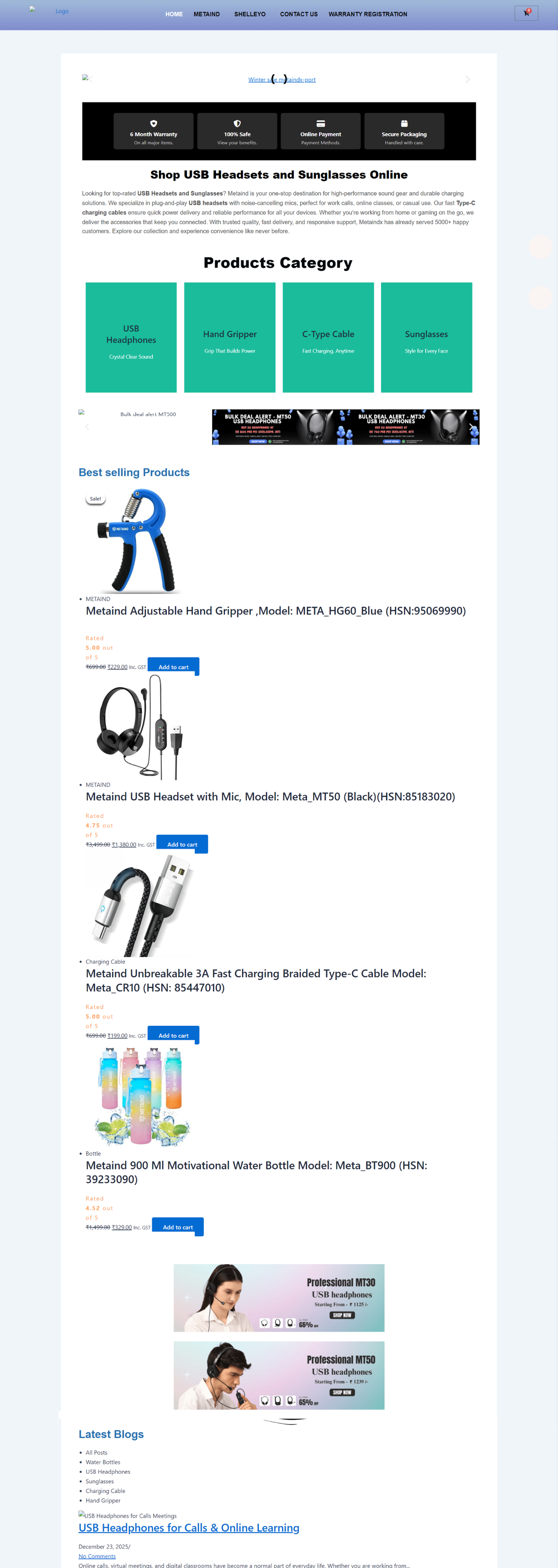
/ Old site
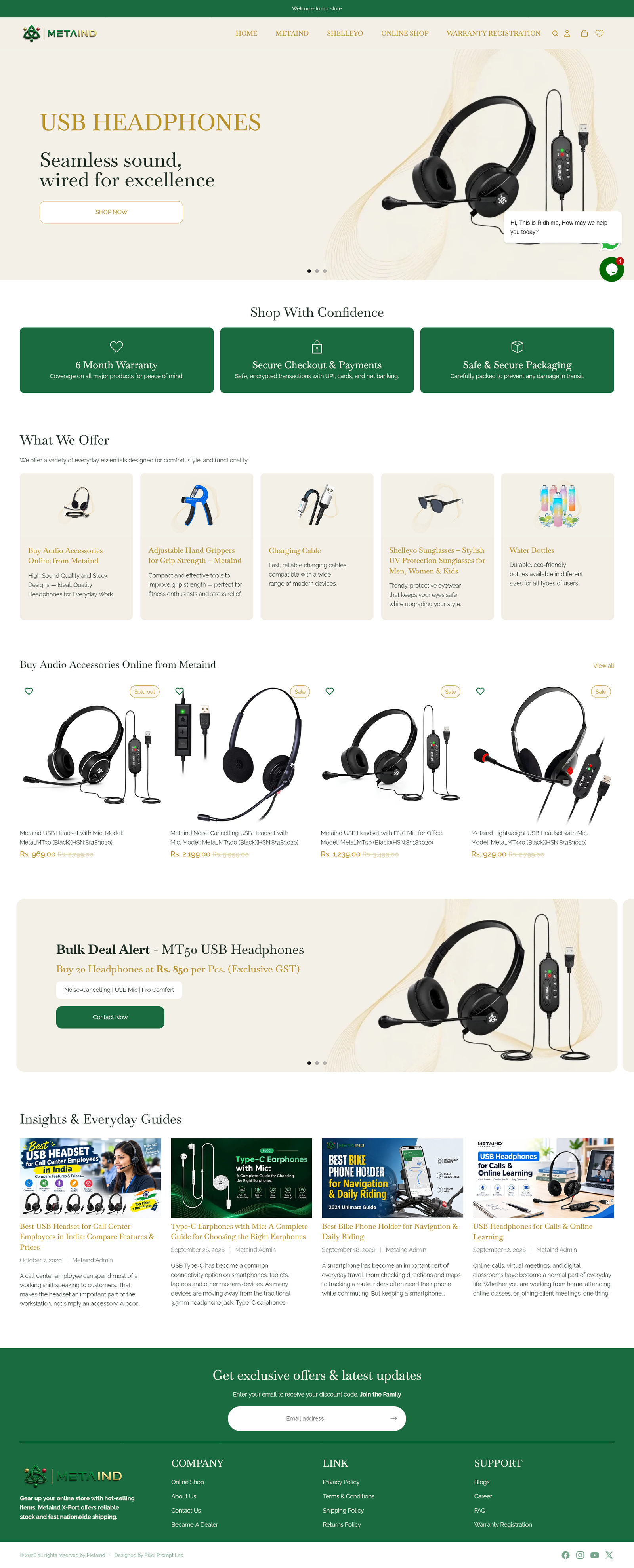
/ New site
/ Insight and strategy
Treat one store as three storefronts sharing one catalogue, and keep the brand in the customer’s life after the sale.
01
Separate brands, shared checkout
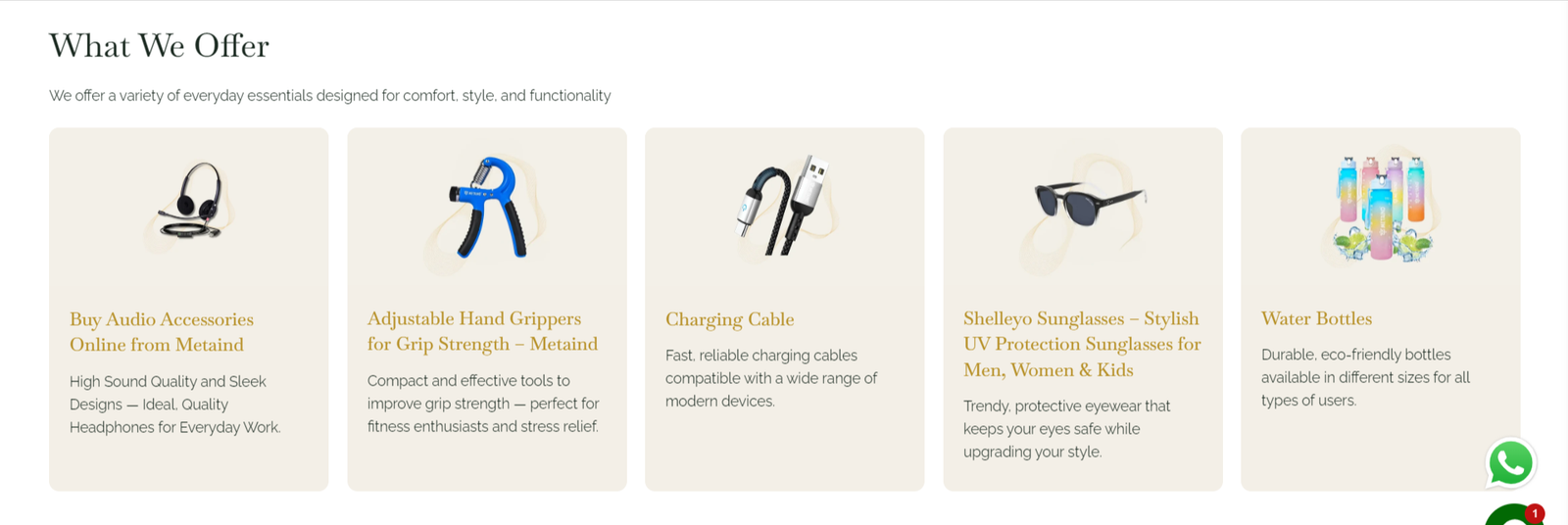
Metaind and Shelleyo each get their own menu and collections, so headset buyers never wade through sunglasses.
02
Make volume visible
Bulk pricing for 20 units sits on the homepage with a direct contact route, so office buyers don't have to ask.
03
Own the after-sale
Warranty registration, WhatsApp support and a dealer route turn one order into an ongoing relationship.
/ What we built
Five systems, each built for one of those buyers.
/ System 1
Multi-brand architecture
Two brands, one store, no confusion. Each brand has its own menu group and collection tree, while customers keep one cart and one checkout.
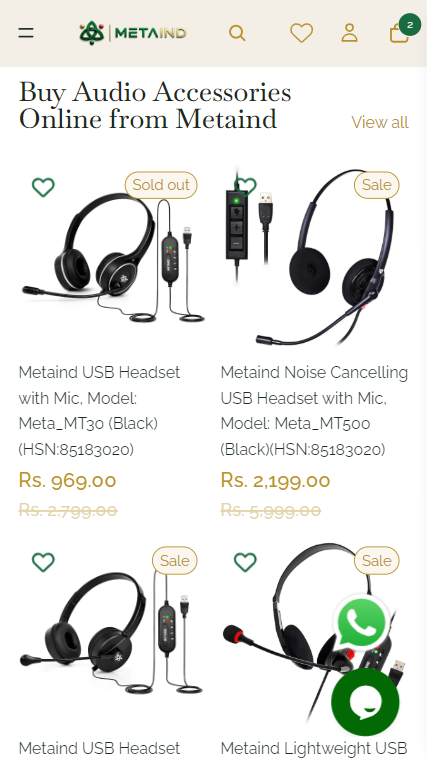
Metaind: USB headphones, 3.5 mm, Type-C earphones, bike holders, grippers
Shelleyo: unisex and kids' sunglasses
"What We Offer" category cards on the homepage
/ System 2
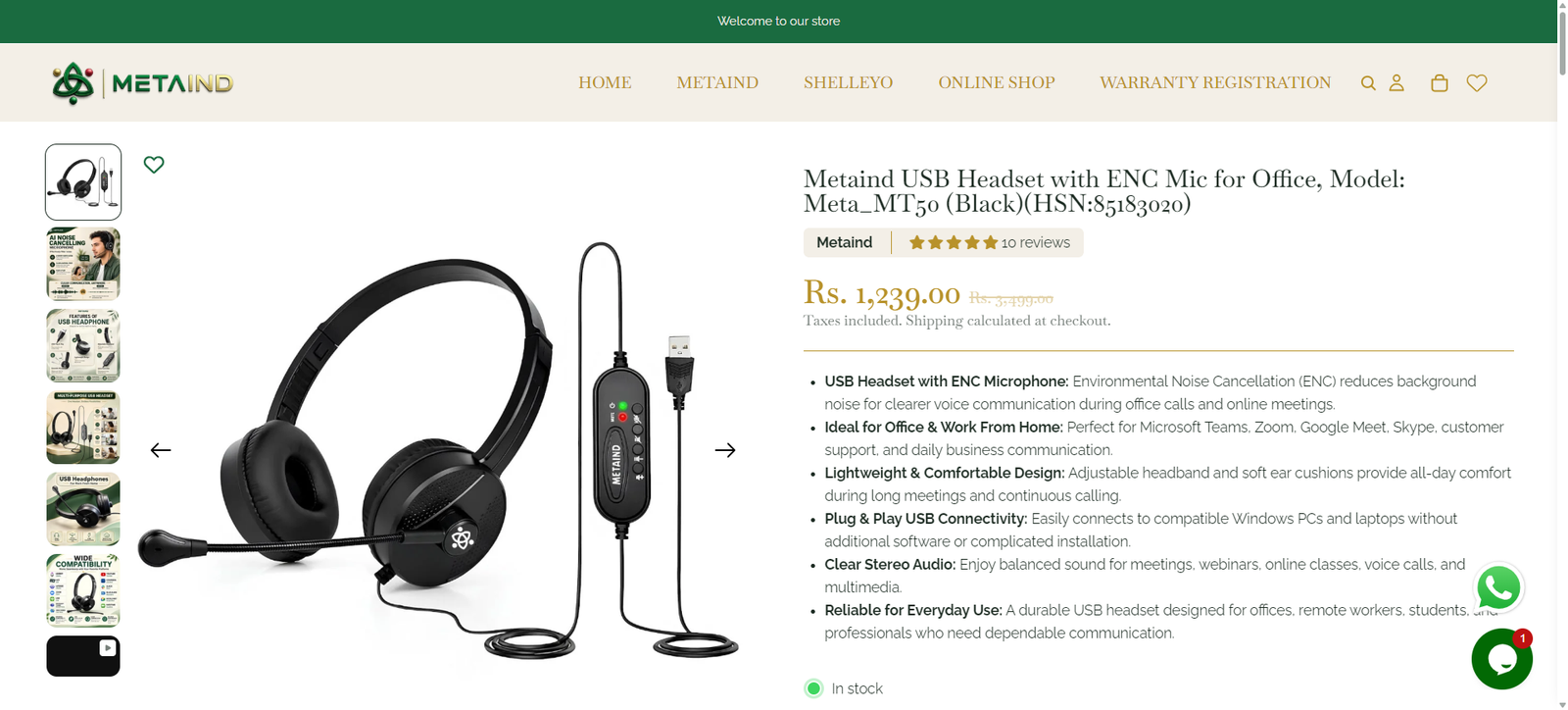
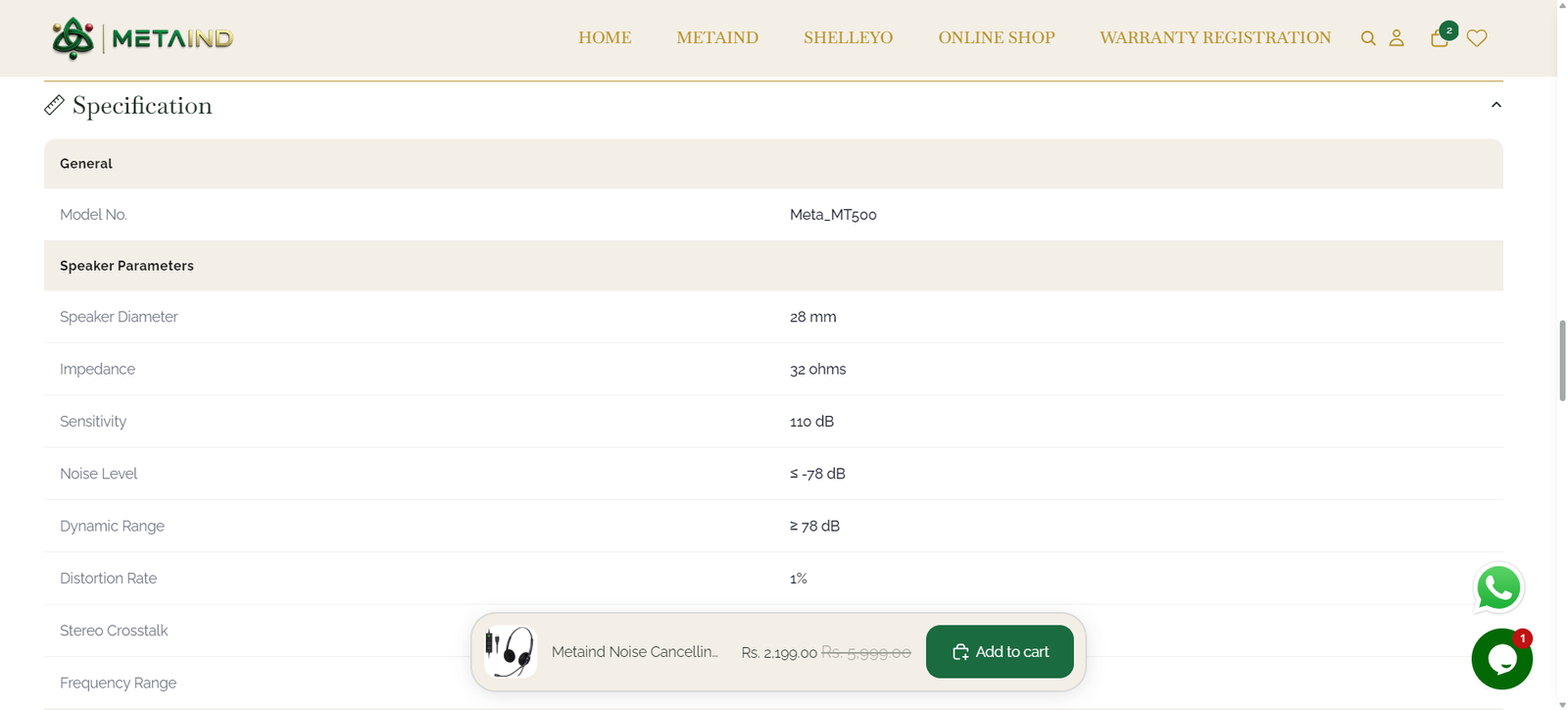
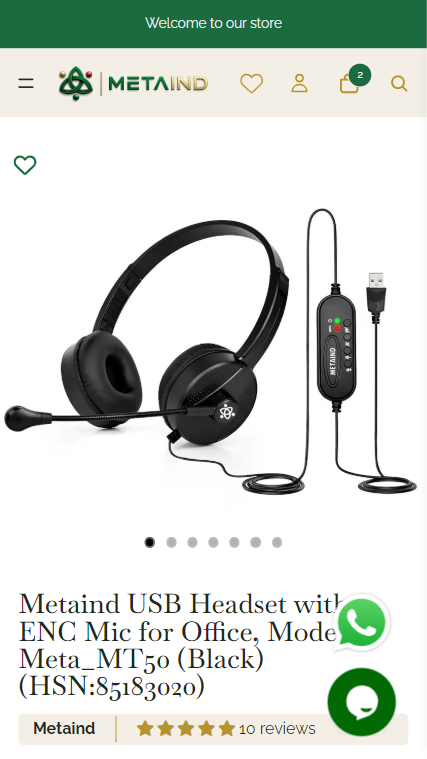
Spec-led product pages
Headset buyers compare details. Every page answers the practical question first: will it work for me?
Image gallery with a product video
Feature bullets and a full specification table
Compatibility with PC, laptop, Teams, Zoom and Google Meet
FAQs and links to compare other headset models
/ System 3
The bulk deal path
Office and call-centre buyers see volume pricing on the homepage, model by model, without having to email and ask.
20-unit pricing for each headset model
Prices shown exclusive of GST, the way business buyers budget
One-tap Contact Now into a direct conversation
/ System 4
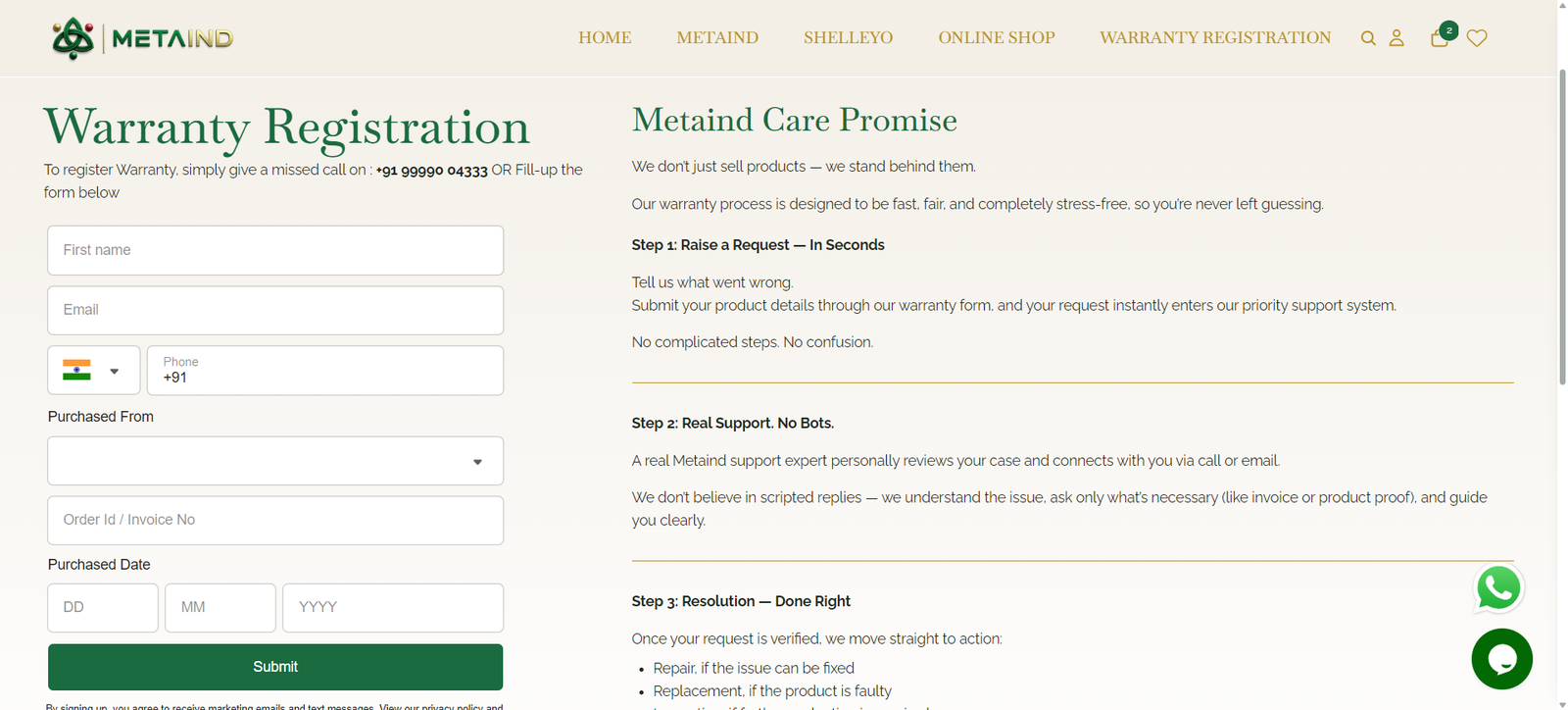
Warranty and support
The strongest reason to buy direct is a brand that stands behind the product. The store makes that promise visible before checkout and easy to use after it.
6-month warranty in the trust strip under the hero
Dedicated warranty registration page in the main menu
Floating WhatsApp support on every page
Secure checkout via UPI, cards and net banking
/ System 5
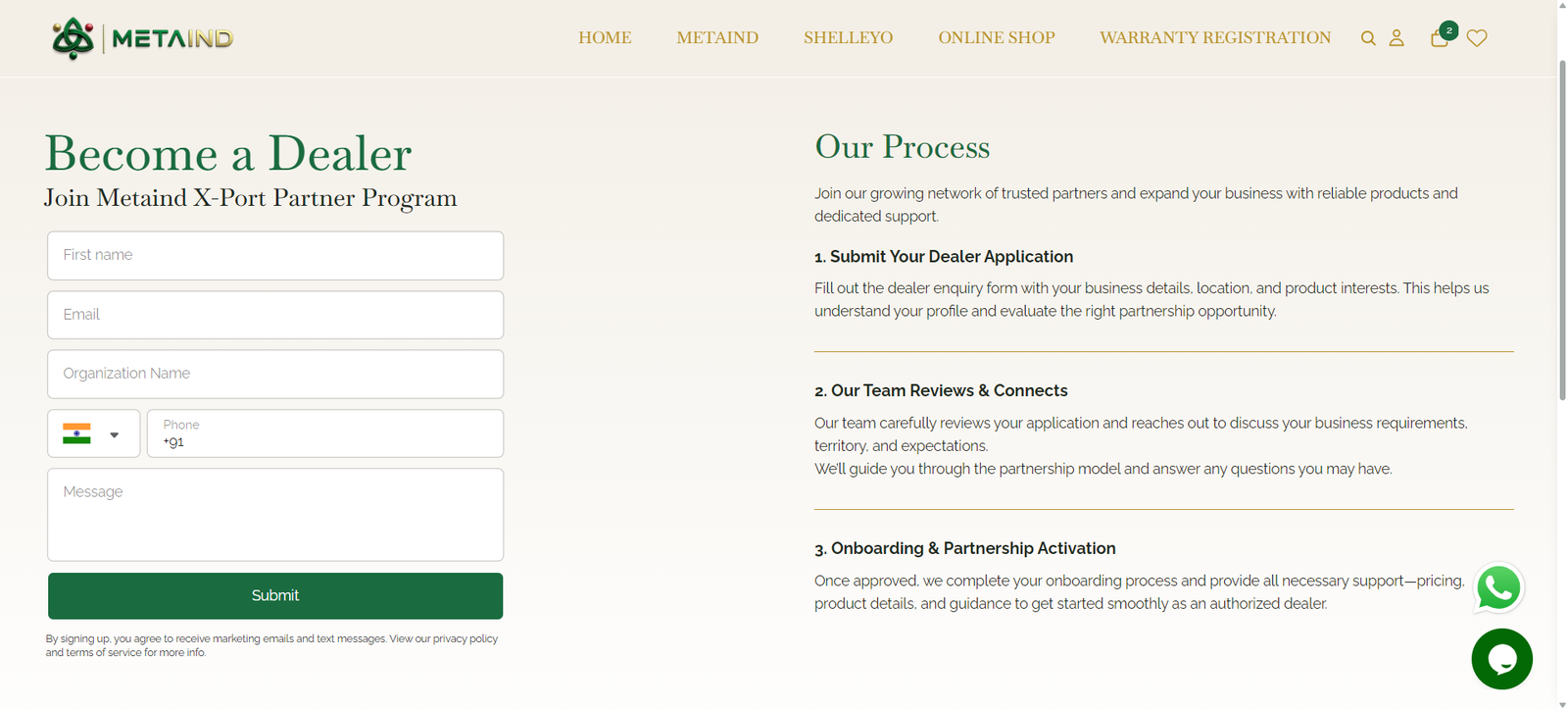
Dealers, content and retention
Growth beyond single orders: a route for shops to become stockists, plus reasons for customers to come back.
Dealer application page for resellers
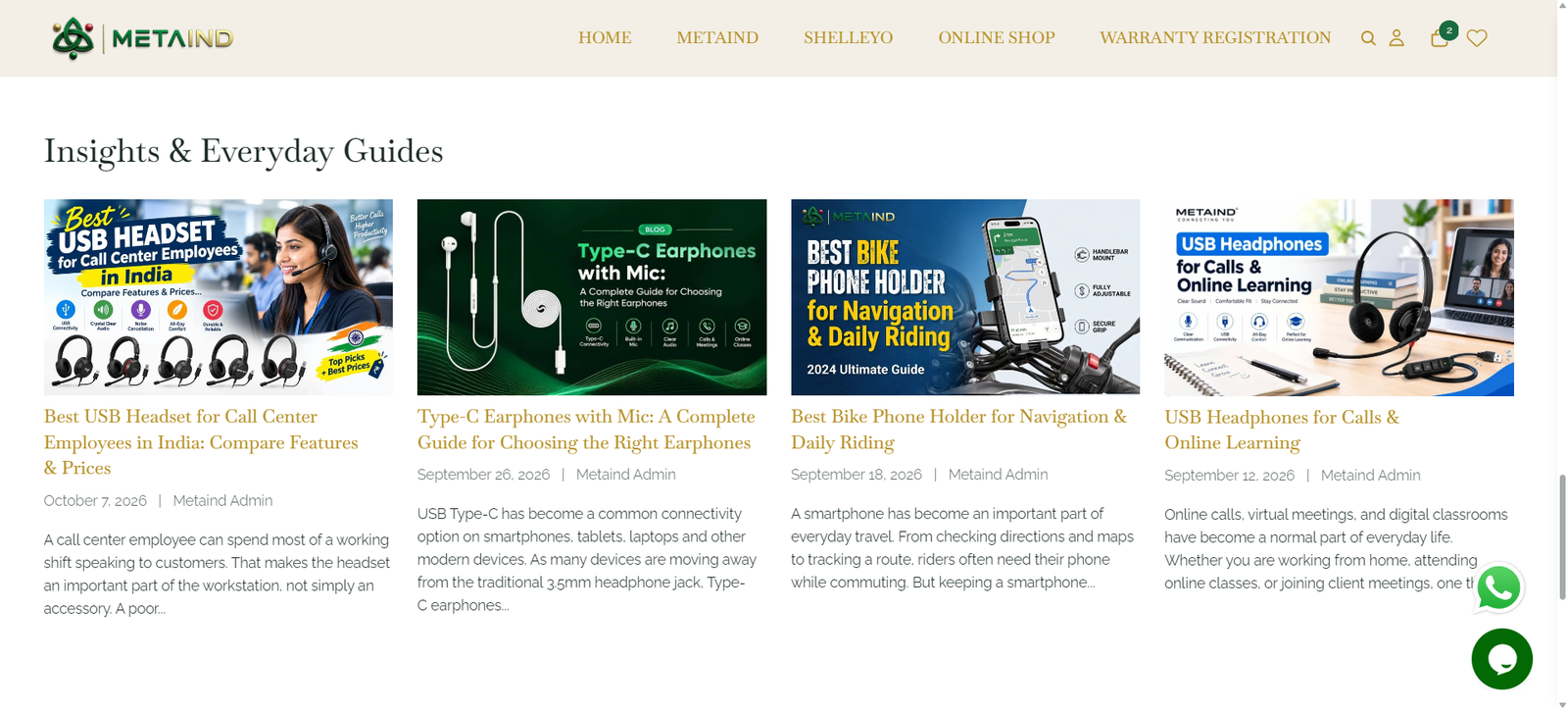
Buying guides on the blog for everyday questions
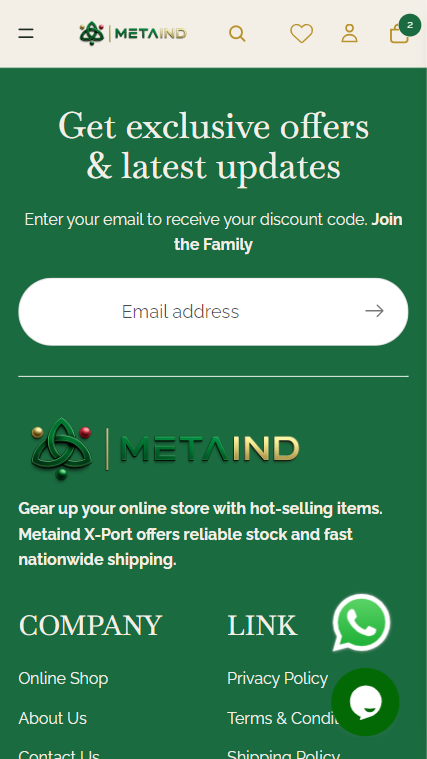
Newsletter sign-up with a discount code
/ Built for the phone first
Most buyers find a headset on their phone, then buy it for their desk. Every path works at thumb size.
/ The result
A store that sells to three kinds of buyer without feeling like three websites.
Founder
Metaind X-Port Pvt Ltd
/ Services
Store strategy · Multi-brand information architecture · Shopify theme build · Product page system · B2B and dealer flows · Launch
/ Platform and tools
Shopify · Warranty registration form · WhatsApp support · Reviews · Newsletter · Blog
/ Your product is curated
Is your store?
If customers love your products but the store doesn’t guide them to buy, that’s what we fix. Start with a fixed-price Store Conversion Audit, delivered in five days.